
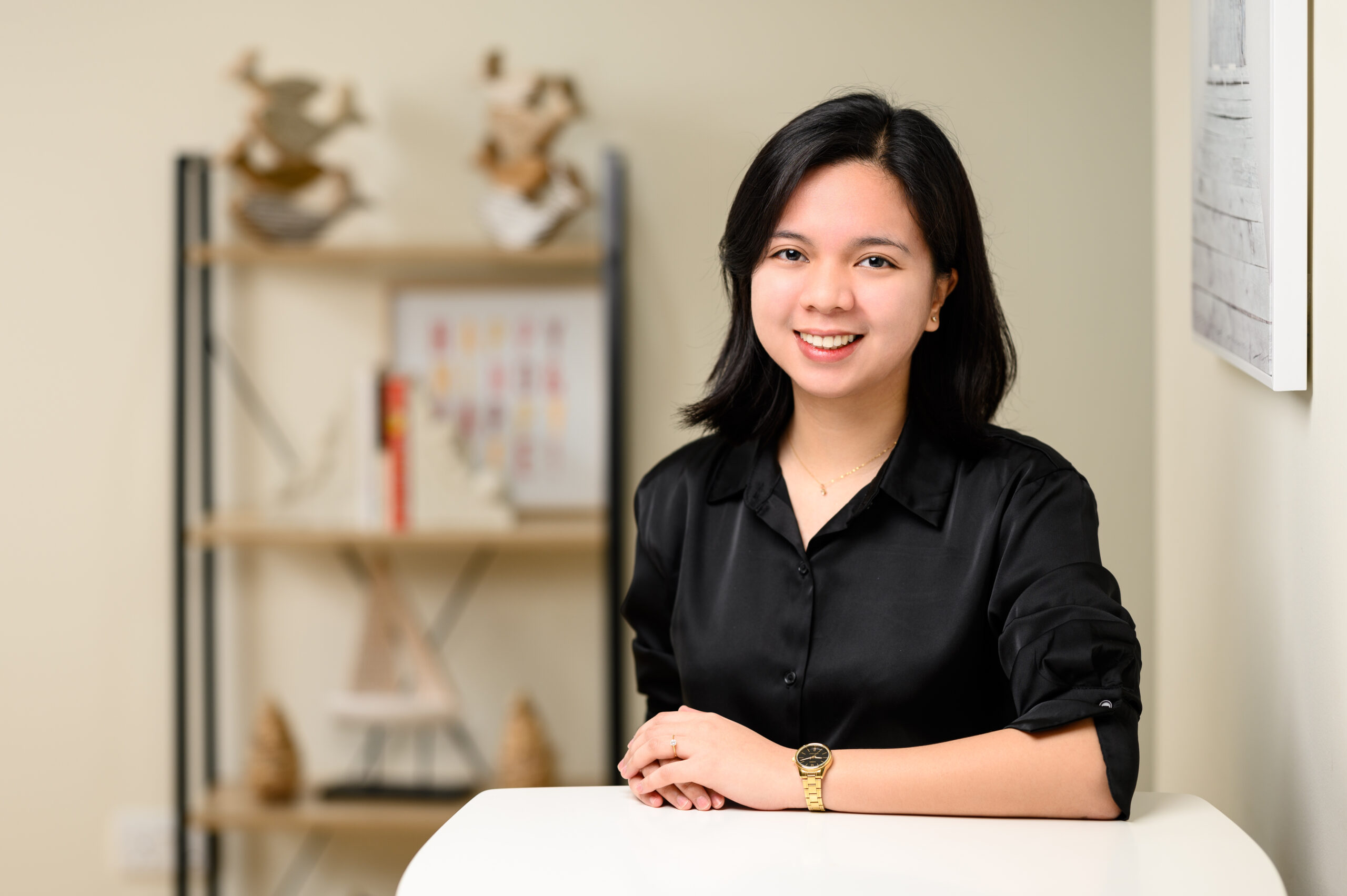
Hi, I’m Patty, I am a psychology graduate who recently became a licensed Assistant Psychologist here in Dubai. If you’re looking into getting licensed yourself, I hope this blog gives you a clear and honest picture of what the process looks like.
When I started out, I struggled to find practical, first-hand information. The official resources were helpful but a little overwhelming. So, I decided to document my experience (step by step) in the hope that it can guide others through the same journey.
What is an Assistant Psychologist Under CDA?
In Dubai, the Community Development Authority (CDA) oversees licensing for social professionals, including Assistant Psychologists. This position falls under the “Social Therapist” category. Here are the basic requirements:
- A bachelor’s degree in psychology (minimum requirement)
- At least one year of relevant work experience
- No licensing exam is required
You can read more about the requirements on the official CDA licensing page.
Step 1: Verifying Your Academic Background
If you earned your degree outside the UAE (like I did), you’ll need to get it recognized locally. This involves two key processes:
- 1. Ministry of Education (MOE)Equivalency
You’ll need an equivalency certificate to prove that your degree meets UAE standards. Before applying:
- Make sure your documents are apostilled in your home country
- Get them stamped by the UAE embassy or consulate in that country
These steps authenticate your documents for use in the UAE.
- DataFlowVerification
DataFlow is a third-party service that confirms your academic and employment history through Primary Source Verification. They will contact your university or employer directly — in my case, there was a delay because my university was unresponsive, so it’s important to follow up with them if needed.
Both MOE and DataFlow may ask for an entry/exit report if they want to confirm you weren’t in the UAE during your studies. You can request this from the airport immigration desks or any AMER center in Dubai.
🔎 Important: MOE Equivalency and DataFlow are two separate processes. You must get a positive result from both.
Step 2: Complete the Required Training
One of the key requirements for licensing is completing a training program provided by the British University in Dubai (BUID). This is mandatory for several roles, including Assistant Psychologist.
To register, I reached out to Mr. Rawy Sabet (rawy.sabet@buid.ac.ae | 050-7368312). I paid a deposit of AED 500 to reserve a slot, and the total cost was AED 4,775 (inclusive of VAT).
The training was conducted online, with a mix of live (synchronous) and recorded (asynchronous) sessions. It’s designed to be working-professional friendly, with classes typically held in the evenings from 5:00 to 8:00 PM — after standard working hours. You can expect the following throughout the course:
- Recitations and group work
- Daily homework
- A final on-the-job training (OJT) component
- A portfolio submission with supervisor feedback
I found the program intensive but manageable. In my case, the sessions ran for two weeks in February, though the schedule may vary depending on the batch.
Step 3: Submit Your Application to CDA
Once you’ve completed your training and received positive reports from MOE and DataFlow, you can submit your application by email to:
📩 professional.licensing@cda.gov.ae
Here’s what I submitted:
- CDA social profession application form (available for download on the CDA website linked above)
- Passport-sized photo
- Copy of my passport and valid residence visa
- Emirates ID (if available)
- Academic certificate and transcript
- Certificate of Good Conduct (from Dubai Police or your home country)
- Experience certificate (if applicable)
- DataFlow report
- MOE equivalency certificate
- Training certificate from BUID
💡 Tip: Have your documents scanned clearly and labeled properly. It makes things easier for CDA to process.
After submission, CDA replied to acknowledge receipt — but it took over a month for them to send the initial approval letter. According to one of my classmates, applications go through a committee review, so waiting is part of the process.
Step 4: Employment & Oath-Taking
Once you receive the initial approval letter, you’ll need to submit an employment contract from a licensed facility in Dubai that confirms your role as an Assistant Psychologist. This letter is valid for six months, giving you time to find a job or secure a promotion.
In my case, I was already working as an Administrative Assistant to Psychologists in a clinic. I just needed to submit my updated contract. Once the CDA reviewed and approved the contract, they scheduled an online oath-taking ceremony, during which I took the professional oath. Shortly after, I received my official license by email. Hooray!
What Assistant Psychologists Are Allowed to Do
As per CDA guidelines, here are some tasks we can do:
- Conduct initial client interviews (general information only, no clinical diagnosis)
- Coordinate appointments, sessions, and referrals
- Assist in research and case reviews under a licensed psychologist
- Administer paper-based psychological tests that don’t require formal interpretation (like the Beck Depression Inventory)
- Score psychological tests and assist in interpreting them — under supervision
But there are also clear boundaries. We cannot:
- Conduct therapy sessions
- Diagnose or treat clients
- Perform clinical evaluations
- Offer guidance or counseling (in-person or remotely)
- Contact clients without the supervising psychologist’s knowledge
We’re there to support (not replace) the psychologist.
My Final Thoughts: What I Learned
From start to finish, the whole process took me about a year. Some of that was waiting for documents, some was training, and some was just figuring things out as I went. There were delays, questions, moments of doubt — but looking back, it was all worth it.
I was working full-time throughout, so everything happened in the background, bit by bit, whenever I could make time. If you’re serious about pursuing this path in Dubai, I encourage you to start as early as possible. Get your documents ready, follow up regularly, and don’t be afraid to ask for help. It’s quite a process, but it’s definitely doable.
Now, I’m proud to say that I’m a licensed Assistant Psychologist at Insights Psychology, where I work closely with licensed professionals to support the mental health needs of our clients. Creating safe and inclusive spaces is what I’m passionate about, and I’m so glad I took this path.
Thanks for reading! If you have any questions or just want to share your experience, feel free to reach out. Good luck on your journey — you’ve got this!


